
The choice between Kanban and Scrum depends primarily on your team’s workflow, project predictability, and capacity for process changes. Scrum works best for teams handling complex projects with defined sprints and clear deliverables—think a software development team building a new payment system with two-week releases. Kanban excels when work arrives unpredictably, priorities shift frequently, or you need continuous deployment—like a DevOps team managing infrastructure issues and feature requests that arrive throughout the day. Neither framework is universally superior; the right choice depends on matching the framework’s strengths to your team’s actual working conditions.
The decision becomes clearer when you understand how each framework approaches work. Both are Agile methodologies, both emphasize continuous improvement, and both break from traditional waterfall thinking. But they differ significantly in how they structure time, measure progress, and handle change. A team that picks the wrong framework wastes energy fighting against it rather than benefiting from it.
Table of Contents
- What Are the Core Differences Between Kanban and Scrum?
- Sprint-Based Predictability vs. Continuous Flow Trade-offs
- Handling Change and Interruptions
- Velocity Tracking and Planning Capabilities
- Team Size and Scalability Challenges
- Distributed and Remote Team Considerations
- Industry and Domain Fit
- Conclusion
- Frequently Asked Questions
What Are the Core Differences Between Kanban and Scrum?
Scrum organizes work into fixed time-boxes called sprints, typically lasting one or two weeks. Each sprint has defined ceremonies—planning, daily standups, reviews, and retrospectives—that create a structured rhythm. The team commits to completing a set amount of work within that sprint, then measures success based on what shipped. sprints create predictability and forcing functions that help teams focus and deliver regularly. Kanban, by contrast, is continuous.
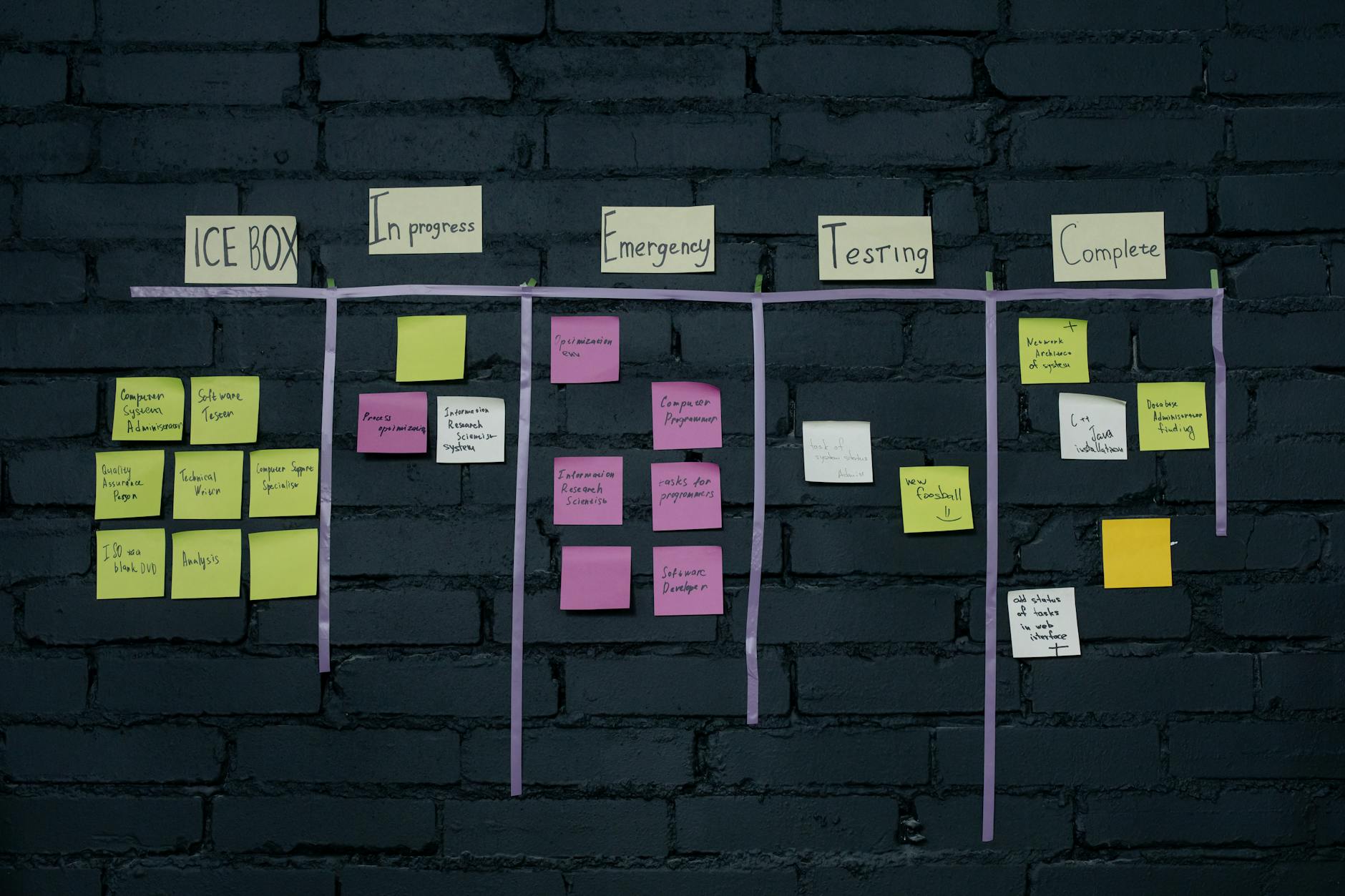
There are no sprints, no “start and end” moments. Work moves through a visual board (traditionally with columns like “To Do,” “In Progress,” “Done”) at its own pace. The system limits work-in-progress to prevent bottlenecks and encourages teams to finish what they started before pulling new items. A team using Kanban might deploy multiple times per day as items reach completion, with no ceremony-driven deadline. A software support team handling bugs and feature requests often gravitates toward Kanban because issues arrive constantly and fixing one bug doesn’t mean stopping work on the next.

Sprint-Based Predictability vs. Continuous Flow Trade-offs
Scrum’s sprint structure creates artificial but valuable deadlines. Teams know they have two weeks to deliver; this constraint focuses effort and prevents scope creep during the sprint. Sprint reviews give stakeholders visibility and create moments of celebration or course-correction. The downside: Scrum’s ceremonies add overhead. A team running two-week sprints with one-hour planning, daily standups, a review, and a retrospective is investing roughly 8-10 hours per week in process. If your team is three people, that’s meaningful time spent not coding.
kanban eliminates this overhead but sacrifices the forcing function. Without sprint deadlines, some teams drift into unstructured work. Without sprint reviews, stakeholders might not see progress for weeks. Kanban demands higher discipline; the team must respect work-in-progress limits and finish items before starting new ones, or the system breaks. A marketing team managing blog posts and landing page updates might thrive on Kanban’s flexibility, but only if everyone actually stops pulling new work until current items ship. Teams underestimate how hard this is without the sprint deadline’s external pressure.
Handling Change and Interruptions
One of Scrum’s most controversial moments comes when an urgent bug or critical request arrives mid-sprint. The framework discourages changing sprint scope; the team is supposed to finish what they committed to, and the new work goes into the backlog for the next sprint. This creates friction but protects focus. In practice, many teams absorb the urgent request anyway, undermining the sprint commitment. A team building a SaaS product might plan two weeks of feature work, then spend half the sprint fighting a production bug.
The sprint completion rate drops, but they stay responsive to real needs. Kanban welcomes interruptions as part of normal workflow. A new high-priority task gets placed near the top of the board, and it moves into “In Progress” when capacity opens. This flexibility is why operations and support teams favor it. A website hosting company handling customer incidents and ongoing maintenance can’t wait for the next sprint; Kanban’s continuous flow matches reality. The trade-off is reduced predictability; you can’t promise stakeholders that a specific feature will ship on a specific date because you don’t know what interruptions are coming.

Velocity Tracking and Planning Capabilities
Scrum’s sprints enable velocity tracking—the team measures how many story points or items they complete per sprint and uses that to forecast future delivery. After three sprints, you know your team completes roughly 30 points per sprint, so you can estimate that a 90-point feature takes about three sprints. This data drives planning and helps answer stakeholder questions like “When will feature X ship?” Velocity is a powerful tool for long-term roadmap planning. A product manager can tell the C-suite when a major feature will likely launch based on historical velocity and current backlog. Kanban tracks cycle time—how long an average item takes from “To Do” to “Done”—and throughput—how many items finish per week.
These metrics are useful but less predictive for complex work. If you know your team completes 5 items per week on average, and your backlog has 50 items, you can estimate 10 weeks. But this breaks down when items vary wildly in size. Some weeks you finish one complex item; other weeks, ten small fixes. For teams doing varied work with unpredictable complexity, Kanban’s metrics provide less actionable foresight than Scrum’s velocity-based planning. A development team must understand this limitation when choosing Kanban for long-term roadmap communication.
Team Size and Scalability Challenges
Scrum works well for small to medium teams (5-15 people). The ceremonies scale reasonably—a standup with eight people takes 10 minutes; one with twenty takes an hour. The sprint provides natural synchronization points. For larger organizations, Scrum frameworks like SAFe (Scaled Agile) layer additional structure on top of Scrum, creating cross-team coordination. The warning: scaling Scrum adds organizational weight. A company with fifty engineers running SAFe has quarterly planning cycles, program increments, and numerous coordination meetings.
Teams often report that the framework becomes its own end rather than a tool for delivery. Kanban can scale more elegantly in some contexts because it doesn’t require synchronization ceremonies. Multiple teams can work on the same backlog, each flowing at their own pace. However, Kanban demands clear prioritization across teams and trust that each team will pull high-value work. Large organizations struggle with this; without the forcing function of sprints, priorities get murky and teams end up context-switching. A financial services company with separate front-end, back-end, and data teams might use Kanban for individual teams but Scrum for cross-team coordination—one of the hybrid approaches that’s increasingly common.

Distributed and Remote Team Considerations
Scrum’s ceremonies are easier to run remotely when everyone knows they happen on the same schedule. The team joins a video call for the standup on Tuesday and Thursday mornings; the sprint planning happens Monday afternoon; the review is Friday. Remote standups are sometimes the only synchronous time the team spends together. Kanban, being asynchronous-friendly, often works better for globally distributed teams. A task moves to “In Progress,” work happens in parallel, and no meeting is required.
The visual board (on Jira, Trello, or similar tools) becomes the communication mechanism. That said, Scrum’s synchronous ceremonies can be a strength for distributed teams—they create cohesion and ensure everyone’s aligned. A remote team that only communicates through a Kanban board sometimes feels disconnected. The trade-off is between scheduled synchronization (Scrum) and asynchronous flow (Kanban). Teams should honestly assess whether their distributed members need more interaction for velocity and morale (choose Scrum) or prefer uninterrupted focus time (choose Kanban).
Industry and Domain Fit
Different industries naturally align with different frameworks. Software product companies often use Scrum because features are complex, interdependent, and need batch releases. A company shipping a mobile app wants to release on a two-week cadence with coordinated features and bug fixes; Scrum’s sprint structure supports this. DevOps, support, and operations teams gravitate to Kanban because work arrives unpredictably.
A cloud infrastructure team deploying security patches, responding to incidents, and handling customer requests can’t wait for the next sprint; continuous flow is essential. Marketing and creative teams increasingly use hybrid approaches—Kanban for content and campaign management (continuous creation and publishing) but Scrum for major campaign launches that require coordinated work from multiple people. Understand your domain’s natural work patterns before forcing a framework onto them. A team that fights the framework spends energy resisting structure rather than delivering value.
Conclusion
Choose Scrum if your work is complex, interdependent, and benefits from fixed planning windows and predictable delivery cycles. Choose Kanban if work arrives unpredictably, priorities shift frequently, or you need continuous deployment without artificial deadlines. The worst mistake is picking a framework based on what’s trendy or what other companies use. Your choice should match how work actually flows through your team.
Many successful teams adopt hybrid approaches—Scrum’s sprint structure for major features, Kanban’s continuous flow for bugs and urgent requests—recognizing that frameworks are tools, not dogma. Start by observing your team’s actual workflow for two weeks without imposing either framework. Do urgent interruptions arrive regularly? Is work predictable or chaotic? Are decisions made quickly or do they require alignment across multiple people? Your answers determine which framework (or hybrid) will feel natural rather than forced. The right framework is the one your team will actually follow.
Frequently Asked Questions
Can a team switch from Scrum to Kanban mid-project?
Yes, though it’s disruptive. Finish the current sprint, then stop scheduling new sprints and shift to a Kanban board. The team will need a week or two to adjust to continuous flow. Give them time before deciding if the change is working.
What if our team is split between Scrum and Kanban preferences?
This usually indicates the team is doing mixed work. Run Scrum sprints for the structured projects, use Kanban for the firefighting and urgent work. Many teams maintain both systems simultaneously, with clear rules about which work type goes where.
Does Kanban work for large, multi-month projects?
Not well alone. Kanban excels at steady flow but struggles with long-term planning visibility. Use Kanban for the execution phase but run Scrum-like planning for the major project phases and milestones.
How do we measure productivity in Kanban vs. Scrum?
Scrum uses velocity (story points per sprint); Kanban uses throughput (items per week) and cycle time (days per item). Both are valid. Pick whichever metric aligns with your planning needs and stakeholder reporting requirements.
Which framework is “better” for remote teams?
Kanban’s asynchronous nature suits global time zones, but Scrum’s scheduled ceremonies build stronger team cohesion. The best choice depends on whether your team prioritizes coordination or flexibility. Some remote teams thrive on Scrum; others need Kanban’s flexibility.
Can we run Scrum sprints without all the ceremonies?
You can, but you’re no longer really running Scrum. You lose the accountability of sprint planning, the visibility of the review, and the learning of the retrospective. If ceremonies feel wasteful, Kanban might be the better fit.