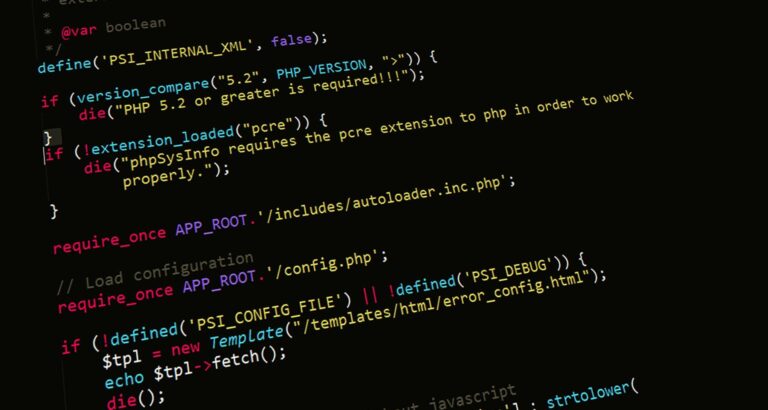

A larger local model still needs Drupal regression checks because bigger parameter counts improve average coding accuracy without eliminating specific, repeatable failure modes — stale APIs, broken parent-class assumptions, and silent feature gaps. Running the model locally changes where the computation happens, not whether its output matches the version of Drupal actually installed on a given site. Open-weight coding models have grown large and capable enough to run on local hardware instead of a hosted API.
Alibaba's Qwen2.5-Coder-32B-Instruct, for example, scored 49.6% on the complete split of the BigCodeBench-Instruct benchmark and topped EvalPlus among the open models it was measured against, according to Alibaba's Qwen technical report. That is real progress for a model a developer can run without sending code to an external service. It does not, on its own, say anything about whether the code that model writes will work correctly inside a specific Drupal installation.
Table of Contents
- Why Bigger Doesn't Mean Current
- What Actually Goes Wrong in Generated Drupal Code
- Where Drupal's Own Test Categories Fit In
- Why the Drupal Community Is Treating This as Unsettled
Why Bigger Doesn't Mean Current
A model's size describes its capacity, not what it knows about a particular Drupal site's module versions, custom hooks, or core release. Training data is a snapshot, and every model — local or hosted — freezes its knowledge of library APIs at whatever point that snapshot was taken. An empirical study that tested seven large language models against 145 known API-deprecation mappings across eight Python libraries found that the models frequently completed code using deprecated APIs instead of the current replacements, specifically because the training data had frozen an older version of each library, according to Wang et al.'s arXiv study. Drupal's own module ecosystem evolves the same way.
A model trained before Drupal 11's object-oriented `#Hook]` attribute became standard will keep reaching for older hook patterns, because that is what its training data rewarded. Drupal's "AI Code Guardrails" project page reports that AI coding assistants repeatedly generate module code using pre-Drupal-11 hook implementations, and separately miss cache tags and misuse the `\Drupal::service()` call inside classes — patterns the maintainer documented across many AI-assisted pull requests, according to [the AI Code Guardrails project page. Bigger local models narrow the gap in general coding benchmarks, but they do not close the gap between a training cutoff and whatever Drupal release, contributed module, or custom hook structure is actually running in production. That gap is exactly what a regression check is built to catch.
What Actually Goes Wrong in Generated Drupal Code
The failures are not abstract. Tag1 Consulting documented a case where an AI coding agent, working on a real Drupal module, produced a PHP fatal error by redeclaring a class property that was already defined in the parent class — a mistake that breaks the site outright and is easy to catch with a basic test run, according to Tag1's blog post on building a Drupal module with Claude Code. In a separate instance on the same project, the generated code threw no error at all but silently failed to implement the requested feature, which is the harder failure to catch because nothing visibly breaks. That second case is the one regression checks exist for.
A fatal error announces itself the first time the page loads. A feature that silently does nothing — or does something slightly wrong — can sit in production for weeks before anyone notices, especially on a site with enough traffic that a subtle behavior change doesn't immediately stand out. This is not unique to Drupal. GitClear's "AI Copilot Code Quality 2025" report, which analyzed 211 million changed lines of code written between January 2020 and December 2024, found an eightfold increase in duplicated code blocks during 2024, and found that the share of changes classified as genuine refactoring or code movement fell from about 25% of changed lines in 2021 to under 10% in 2024, according to GitClear's report as covered by I Programmer. More generated code, with less of it being cleaned up or consolidated afterward, is the broader trend that makes a verification step necessary across any codebase AI touches — Drupal included.
Where Drupal's Own Test Categories Fit In
Drupal core already has a built-in answer to "how do I know this change didn't break something": its own testing framework. Drupal's core API documentation states that a bug-fix patch should include a test that fails without the fix and passes with it, and it organizes the automated suite into unit, kernel, functional, and functional-JavaScript categories, according to Drupal core's official testing documentation. That structure maps directly onto the two Tag1-documented failures.
A unit or kernel test would have caught the redeclared class property before the fatal error ever reached a browser. A functional test — one that exercises the actual feature end to end — is what would have caught the silent no-op, because it checks the observable behavior a user or site owner actually cares about, not just whether the code parses. The practical implication is that a larger local model doesn't replace this structure; it still has to write code into it. Treating a model's confident-sounding output as finished work, rather than as a draft to run through Drupal's existing test categories, is where the risk lives — not in the model's size.
Why the Drupal Community Is Treating This as Unsettled
Drupal's maintainers and contributors are not treating AI-written module code as a solved problem. Drupal's "AI Upgrade Assistant" module page explicitly warns that the tool is experimental, states there is a non-zero chance it will break a site, and advises against using it in production, according to the AI Upgrade Assistant project page. That is an official project maintained within the Drupal ecosystem itself cautioning against unverified automation — not an outside critique. The community is actively working through what does and doesn't work.
A Birds-of-a-Feather session scheduled for DrupalCon Chicago on Monday, March 23, 2026, features presenters who built a full Drupal 11 module using Claude Code with no human-written PHP, and the session description frames hallucinated APIs, stale Drupal API knowledge, and route-override pitfalls as open problems the community is still mapping out, according to the DrupalCon Chicago 2026 session listing. That a full module can be built this way is itself notable progress; that the session exists to catalog what breaks is the other half of the same story. Independent benchmarks reinforce that even a strong local model trails the frontier hosted models most teams compare it against. On Aider's code-editing benchmark, Qwen2.5-Coder-32B scored 74% on "whole edit" tasks against Claude 3.5 Sonnet's 84%, according to results cited via Aider's leaderboard. A local model closing that gap in future releases doesn't remove the need to verify its output against a real Drupal environment — it just means the volume of plausible-looking code a team has to check keeps growing.